
Small-savings schemes like PPF, NSC, SCSS, SSY, and Post Office Time Deposits have always been go-to options for Indians seeking both safety and returns. These सरकारी योजनाएं offer guaranteed, tax-efficient returns that compete well in the current financial environment. For everyday savers—students, working professionals, and especially senior citizens—small-savings interest rates impact financial planning directly. This blog simplifies everything: what these schemes are, current interest rates, how to invest, required documents, and FAQs. Whether you’re saving for your child’s education, retirement, or long-term wealth, understanding these rates in 2025 is essential to maximize your benefits.
(Overview in Simple)
Small-savings schemes are government-backed deposit plans offered via post offices and public-sector banks. They include popular instruments like:
- Post Office Savings Account & Time Deposits
- Public Provident Fund (PPF)
- National Savings Certificate (NSC)
- Sukanya Samriddhi Yojana (SSY)
- Senior Citizens’ Savings Scheme (SCSS)
- Kisan Vikas Patra (KVP)
- Post Office Monthly Income Scheme (POMIS)
These schemes provide risk-free returns and are often linked to fixed income for pensioners and parents, making them vital in the latest yojana list for savers.
(Main Objectives)
The government maintains and adjusts rates quarterly to:

- Encourage safe, long-term savings
- Offer competitive interest (25–100 basis points above government bonds)
- Provide financial inclusion with easy access through post offices
- Support tax-saving investments under Sec 80C
(Benefits of the Scheme)
- Guaranteed returns backed by the government
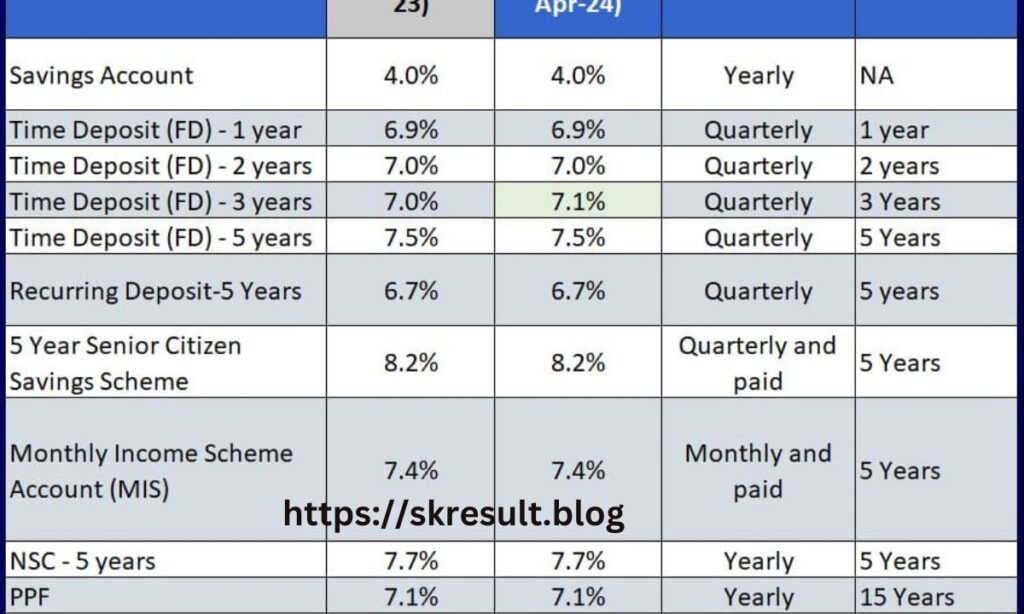
- Competitive rates—PPF (7.1%), NSC (7.7%), SSY/SCSS (8.2%) for Q1 FY 2025‑26
- Tax benefits: Principal, interest or both are exempt under Sec 80C
- Flexible tenures: Short, medium or long term options available
- Low risk & easy procedure via post offices for remote access
(Eligibility & Required Documents)
Most schemes allow:
- Minimum age: Varies (e.g., SCSS requires ≥60 years; SSY for girl child)
- Income: Typically no limit
- Eligibility: Indian citizens (some allow NRI minors as nominees)
Common documents required:
| Scheme | Documents |
|---|---|
| All schemes | Aadhaar, PAN, Passport-size photos, Address proof, Bank account details for PPF/SCSS/SSY |
| SCSS | Age proof (born before 1 March 1965) |
| SSY | Birth certificate and guardian’s ID proof (for girl child under 10 years) |
(Step-by-Step Guide: Online/Offline Process)
Online via Post Office e-services or Banks
- Register on India Post MyAccounts or your bank’s portal
- Choose the scheme (e.g., PPF, SSY) and upload documents
- Enter personal and bank info
- Make initial deposit online or via cheque at the bank
- Get account details (passbook, receipt) digitally
Offline Procedure
- Collect account opening forms at post office/bank
- Fill details, attach documents and photos
- Submit along with initial deposit
- Get the physical passbook/receipt
(Important Notes & Precautions)
- Review rates quarterly: April–June 2025 saw no changes
- Check lock-in periods: PPF – 15 years; NSC – 5 years; SSY – until girl turns 21 or marries
- Use Section 80C benefits carefully, up to ₹1.5 lakh/year
- Beware of FD rate cuts: SBI recently cut FD & savings rates—your small-savings remain more consistent
- Interest payment frequency can be quarterly (SCSS), annual (PPF), or maturity date (NSC)
- Premature withdrawal rules vary—some schemes allow early closure with penalties
(Conclusion with summary & user encouragement)
In 2025, small-savings schemes remain one of the most trusted investment sources—offering safe, tax-efficient returns and serving a wide range of financial goals. With no rate changes in Q1 FY26, these instruments continue to stand out, especially for cautious investors and senior citizens.
👉 Start or continue investing in one of these schemes today based on your goal—whether retirement, education, or emergency funds—and benefit from reliable returns and tax incentives.

FAQ (Common Doubts Cleared)
Q1. Have interest rates changed in April–June 2025?
A1. No—rates remain unchanged for key schemes like PPF (7.1%), NSC (7.7%), SCSS/SSY (8.2%)
Q2. How often are rates revised?
A2. Quarterly—every April, July, October, and January—based on economic conditions.
Q3. Which scheme gives the highest return?
A3. SSY and SCSS currently offer 8.2%, most attractive among them .

Q4. Can I key-in online apply and invest more than ₹1.5 lakh per year in PPF?
A4. No—the maximum PPF deposit limit is ₹1.5 lakh per fiscal year.
Q5. Are these schemes safe during inflation?
A5. Yes—they offer above-inflation returns and provide tax advantages, making them strong long-term choices.